
History
Main article: History of Japan § Early Age. The first Japanese left a detailed record of distinctive cord-marked Jōmon pottery and early wet-rice agricultural tools.
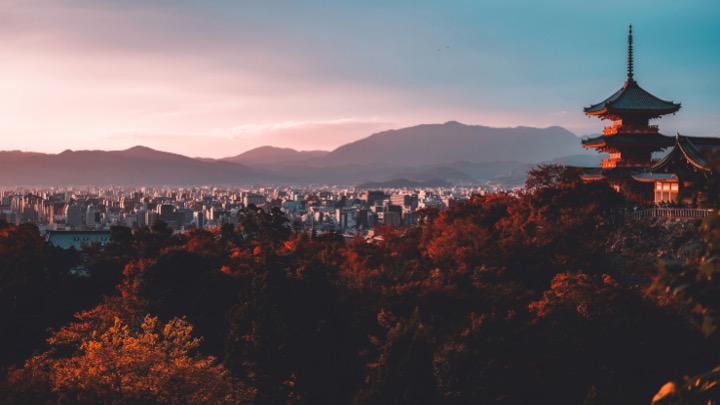
Their earliest village settlements utilized sunken pit dwellings, timber posts, and thatched roofs, which regularly deteriorated in the humid, earthquake-prone environment of the volcanic islands. However, as influential regional clans organized into a centralized imperial state, builders began constructing massive, earth-and-stone burial mounds (kofun) and fortified regional structures rather than permanent, sprawling cities. Moreover, powerful local rulers governed via localized elite networks, but their deeply embraced Shinto and newly integrated Buddhist traditions ultimately required the construction of towering multi-story wooden pagodas, grand shrines, and expansive imperial temple compounds. Comparative studies of Japanese oral mythologies and early chronicle records (like the Kojiki).

Geography
The Japan consists of an elongated volcanic archipelago of over 14,000 islands (dominated by the 4 main islands of Honshu, Hokkaido, Kyushu, and Shikoku), along the north-south direction, spread over roughly 377,975 square kilometres (145,937 sq mi), making this one of East Asia’s most coastal-dependent insular nations. It lies between latitudes 24° and 46°N, and longitudes 122° and 146°E. The terrain is composed of heavily forested, rugged mountain chains that cover over 70 percent of the land area, situated atop a highly volatile junction of multiple major tectonic plates that rises steeply from the deep ocean trenches of the Pacific Ocean and runs continuously along the western edge of the Ring of Fire.